




What Is Estate Planning — And Why It Matters
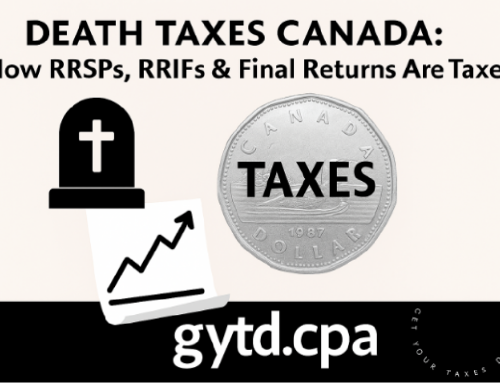
Estate planning in Canada means deciding how your money, property, and other assets will be handled when you pass away. It includes making a will, choosing beneficiaries, and reducing tax burdens — especially on RRSPs, RRIFs, and capital gains at death.
Although Canada doesn’t have a formal “estate tax,” the Canada Revenue Agency (CRA) uses deemed disposition rules. This means many of your assets are taxed as if you sold them just before death, which can result in a large tax bill for your estate or family.
If you live in Ontario, you’ll also need to consider probate fees (officially known as the Estate Administration Tax).
Key Elements of Estate Planning in Canada
-
Write a Valid Will
A will outlines who inherits your assets and who will carry out your wishes. It should include:
- Your executor (the person who manages your estate)
- Distribution of assets (property, savings, business shares)
- Guardianship of minor children
- Funeral or memorial preferences
Tip: Without a will, your estate is settled based on provincial law — not your wishes.
-
Name Beneficiaries on Registered Accounts
Accounts like RRSPs, RRIFs, and TFSAs allow you to name beneficiaries. These assets usually avoid probate and can sometimes be transferred tax-free — but only if structured correctly.
Spouses, common-law partners, or financially dependent children may qualify for special tax treatment.
How RRSPs and RRIFs Are Taxed at Death in Canada
RRSP at Death
- The full value of your RRSP is added to your income on your terminal tax return.
- If your spouse or common-law partner is a qualifying survivor, the RRSP can transfer to their RRSP without immediate tax.
- You can also name a financially dependent child or grandchild in some cases.
RRIF at Death
- The full value of a RRIF is generally taxed at death unless a successor annuitant is named.
- If your spouse is a designated beneficiary, they can transfer it to their own RRIF tax-free.
- Growth of the RRIF after death is also taxable unless properly rolled over.
Key Deadlines
- Transfers must happen by December 31 of the year after death or within 60 days of year-end.
- Failure to meet these deadlines means the full value becomes taxable.
Probate Fees and Estate Administration in Ontario
In Ontario, probate tax (Estate Administration Tax) is calculated as follows:
- $0 on the first $50,000 of the estate
- 1.5% on amounts over $50,000
Assets with named beneficiaries (like RRSPs or insurance) are not included in probate, but only if beneficiary designations are up to date.
Other Important Estate Planning Documents
- Power of Attorney for Property: Allows someone to handle your finances if you’re incapacitated.
- Power of Attorney for Personal Care: Lets someone make health decisions for you.
- Trusts: Used for minor children, dependents with disabilities, or to control when and how assets are distributed.
✅ Estate Planning Checklist for Families in Canada
| Task | Why It’s Important | When to Do It |
| Write a will | Ensures your wishes are followed | ASAP and review every 2–3 years |
| Designate beneficiaries (RRSP, RRIF, TFSA) | May reduce tax and avoid probate | When opening accounts and during life changes |
| Name a successor annuitant (RRIF) | Avoids tax and simplifies transfer to spouse | Before death |
| Confirm child dependency status | May allow rollover options | Periodically |
| Set up powers of attorney | Ensures decisions can be made for you | Now |
| Keep estate liquid | To pay taxes and fees without selling assets | Regularly monitor |
| Set up a trust | Controls when and how minors inherit | With CPA/lawyer guidance |
| Meet with professionals | Ensures all parts of your plan work together | Ongoing |
💼 Why Work with GYTD CPA for Estate Planning
At GYTD CPA Professional Corporation, we help individuals and families across Canada — especially in Ontario — with personalized estate and tax strategies. We provide:
- T1 personal and T2 corporate tax return filing
- Estate tax and financial planning
- Final and fiduciary return preparation
- Bookkeeping and fractional CFO services
We make complex rules around RRSPs at death, RRIF tax deferral, and capital gains at death in Canada easy to understand and manage.
❓ Frequently Asked Questions (FAQs)
Q1: Does Canada charge an estate tax?
No federal estate tax, but CRA taxes deemed capital gains, RRSPs, and RRIFs at death.
Q2: Can I avoid tax on my RRSP if I leave it to my spouse?
Yes. If they’re a qualifying survivor, your RRSP can transfer to theirs tax-free.
Q3: What is a terminal tax return?
It’s the final personal return filed after someone dies. It reports all income, including RRSP/RRIF values and capital gains.
Q4: How much are probate fees in Ontario?
$15 per $1,000 on estate values above $50,000. No fees on the first $50,000.
Q5: How can I reduce tax on death?
Use tools like life insurance, trusts, and proper beneficiary designations. Professional planning is key.
📞 Need Help With Estate Planning? Contact GYTD CPA Today!
Planning your estate is one of the most important financial decisions you can make. With our expert support, you can minimize tax, protect your family, and ensure your legacy is secure.
Call us, visit our website https://gytd.cpa , or email us at info@gytd.cpa to book your personalized estate planning consultation with GYTD CPA Professional Corporation.
Share This Story
Recent Posts
 How to Prepare a T5 Slip in Canada: A Complete CRA Filing Guideline
 Death Taxes Canada: How RRSPs, RRIFs & Final Returns Are Taxed
 Canadian End of Year Payroll Checklist: Your Ultimate Guide
 Tax Strategies for New Work Permit Holders in Canada
 A Comprehensive Guide to the Canada Child Benefit (CCB) Program