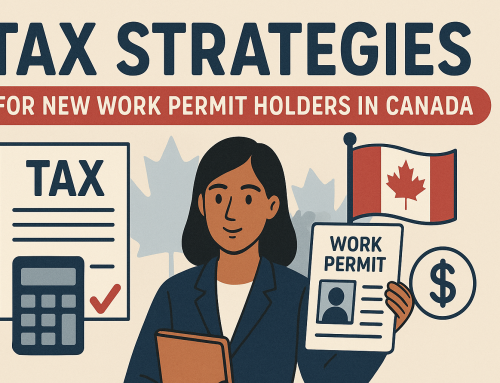





If you’re a Canadian considering a temporary work stint in the U.S., you might be concerned about the tax implications on your payroll. Here’s a guide to help you navigate this situation and potentially avoid double taxation.
Scenario: Consider Vanessa, an employee of a Canadian firm based in Ontario. She’s been assigned to work for a client in Florida for a part of the year. While she’ll spend 8 months in Canada, she’ll be in the U.S. for 4 months. Vanessa’s primary concern is understanding her tax obligations given this arrangement.
The Tax Dilemma: The central question is whether Vanessa is liable to pay taxes in both Canada and the U.S. The tax treaty between the two countries clarifies that employment income is taxable in the nation where the work physically occurs. As Vanessa is working in both countries, she’s subject to payroll taxes in both places. This could lead to her income being taxed twice: once in Canada and then in the U.S.
In Canada, payroll deductions include income tax, employment insurance, and contributions to the Canadian Pension Plan. In the U.S., deductions are for federal tax, state tax, social security, and Medicare.
For the year, Vanessa’s earnings would be reflected in a T4 slip (Canadian employment income slip) showing a total of $120,000 (given she earns $10,000 monthly). Additionally, she’d receive a W2 slip (U.S. wage statement) indicating her U.S. earnings of $40,000 for the 4 months. After accounting for both countries’ payroll deductions, Vanessa’s monthly income of $10,000 could be reduced significantly.
Avoiding Double Taxation: To mitigate this, Vanessa can file form T1213, which requests a reduction in tax deductions at the source. By doing this, her Canadian payroll taxes would be decreased by roughly the amount she’s taxed in the U.S., helping prevent double taxation.
Moreover, Vanessa might not want to contribute to U.S. Social Security and Medicare, especially if she doesn’t plan to avail of these benefits post her U.S. tenure. To address this, her employer can obtain a Certificate of Coverage from the CRA. This ensures she doesn’t pay into U.S. Social Security and Medicare, and instead, her contributions go to the Canadian pension plan.
In Conclusion: By taking these measures, Canadians like Vanessa working temporarily in the U.S. can potentially avoid the burden of double taxation, ensuring they retain more of their hard-earned money.
Tip: Canadians temporarily working in the U.S. can follow these steps to avoid double taxation and maximize their earnings.
Share This Story
Recent Posts
 How to Prepare a T5 Slip in Canada: A Complete CRA Filing Guideline
 How to Plan Your Estate in Canada: Simple Steps for Families
 Death Taxes Canada: How RRSPs, RRIFs & Final Returns Are Taxed
 Canadian End of Year Payroll Checklist: Your Ultimate Guide
 Tax Strategies for New Work Permit Holders in Canada