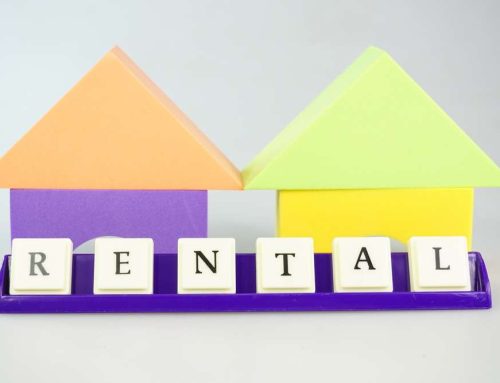





Considering an investment in Florida’s sunny locales? Here’s a guide for Canadians on the tax implications of owning a rental property in Florida:
- The Financials:
- Consider an example where the mortgage is $165,000 at a 4% interest rate over 30 years.
- Management fees aren’t charged for the first two years. From the third year, a 15% fee on gross monthly rents is applicable.
- Tenants cover utility bills.
- Avoiding Double Taxation:
- Canadians are taxed on their global income. However, to avoid being taxed twice, you can claim a foreign tax credit on your Canadian tax return for taxes paid in the U.S.
- Taxable Income in Both Countries:
- Assuming a purchase price of $220,000 with $40,000 for land, the taxable income in the U.S. is $1,248 and in Canada, it’s $4,188. The difference arises because Canada allows a smaller depreciation deduction than the U.S.
- Mortgage interest and interest on a line of credit used for the down payment are deductible. However, the principal portion of the mortgage isn’t.
- Tax Liabilities:
- In the U.S., everyone gets a $4,050 personal exemption. So, if your taxable income is below this, you won’t owe U.S. taxes. This assumes the rental property is your only U.S. income source. Additionally, Florida doesn’t have a state income tax.
- In Canada, taxes on profits from your U.S. property depend on your tax bracket. For instance, at a 35% marginal tax rate, you’d owe taxes on $4,188 of taxable profit.
- Depreciation:
- In the U.S., property costs (excluding land) can be depreciated over 27.5 years. In Canada, it’s 4% of the property cost (excluding land) on a declining balance, except for the first year where it’s only 2%.
- Withholding Taxes:
- Non-residents earning rental income in the U.S. face a 30% withholding tax. For a monthly rent of $1,500, this is $450. This tax is credited back when filing a U.S. non-resident tax return.
- From the second year, this withholding tax isn’t applicable if you have a U.S. Tax ID Number (ITIN) and provide the relevant form to your property manager.
- U.S. Tax Return:
- Annually, you must file a U.S. non-resident tax return detailing rents and expenses. This is due by June 15 if you’re a non-resident alien outside the U.S.
- Capital Gains:
- Profits from selling your property and recaptured depreciation are taxable in both countries. For instance, selling the property at $320,000 after 5 years (initial price $220,000) means a $100,000 profit. Taxes on this are $17,492 in the U.S. and $3,811 in Canada, with Canadian taxes reduced by a foreign tax credit.
Share This Story
Recent Posts
 How to Prepare a T5 Slip in Canada: A Complete CRA Filing Guideline
 How to Plan Your Estate in Canada: Simple Steps for Families
 Death Taxes Canada: How RRSPs, RRIFs & Final Returns Are Taxed
 Canadian End of Year Payroll Checklist: Your Ultimate Guide
 Tax Strategies for New Work Permit Holders in Canada